
About Kallos
Kallos in ancient Greek thought was not simply external beauty, but a deeper concept that connected aesthetic perfection with inner virtue. The body, as a reflection of the soul, had its own narrative, expressing Kallos through movement, posture and balance.
The narrative of the body through Beauty
1. The posture of harmony – Just as the ancient Greeks sculpted their statues with the golden rule, the human body expresses Beauty when it stands with natural balance. Neither stiff nor relaxed, but with a calm, grounded presence that radiates confidence and grace.
2. The movement of flow – The ancients worshipped the rhythm of movement. A body that moves with naturalness and flexibility, without unnecessary tension, is an expression of Beauty. Just as water flows without resistance, so the human body speaks when its movements are in accordance with its inner harmony.
3. The balance of mind and body – In the ancient Greek tradition, the body and spirit were not separate. A body that did not reflect the tranquility of the mind was not considered beautiful. The gaze, the breath, the posture – everything was part of an invisible narrative that revealed the truth of existence.
4. The beauty of simplicity – The greatest artists and philosophers saw beauty in simplicity. A body that stands with honesty, that doesn’t try to impress but simply is, inspires true Beauty.
In essence, Beauty was not just a matter of aesthetics but a way of being. Our bodies tell our story, and when we live with virtue, conscience, and harmony, our very being becomes an expression of beauty.
Rodolfo Danielyan
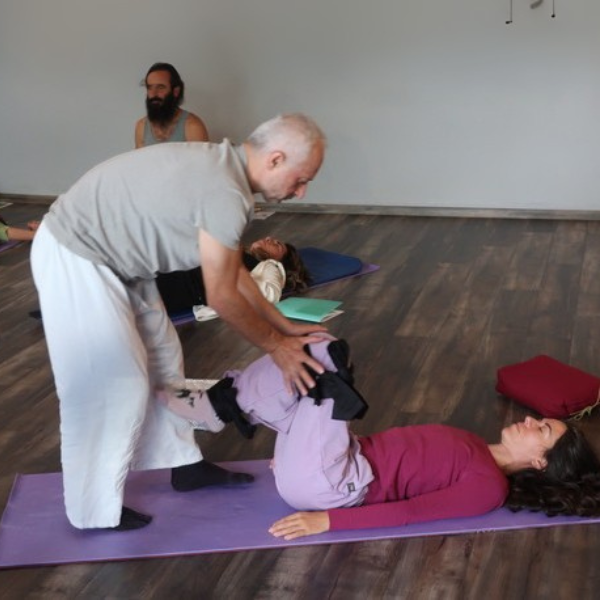
My professional path in bodywork therapy began with my love for movement and understanding the human body. Through the practice of Aikido, the Japanese martial art, I discovered the importance of lightness, flexibility and harmony. This involvement opened the way for me to a deeper understanding of the connection between soul, body and mind.
In 2015, at an Aikido seminar, I was introduced to the Talmi method and Isogai therapy for the first time. This experience inspired me to delve deeper, participating
in workshops and collaborating with experienced teachers. Among these, the 2016 workshop in Berlin, by Sensei Watanabe.
In 2018, I started lessons with Martin Gruber in the Talmi method. Along the way, I began to apply the techniques I learned, helping friends and acquaintances. Today, with more than 6 years of experience in sessions with adults and children, I have understood that the changes in the body are profound and often subtle, but transformative.
In 2023, at an Aikido seminar, we met again with our close friend Jens Holger who, with his many years of experience in a clinic in Germany and his close cooperation with leading Japanese teachers, has contributed significantly to the dissemination of the Isogai method. He, with the rights granted to him, called this method Shinka (which means "the contact of the heart"). Jens was one of the closest students of Watanabe and other teachers of this ancient method.
In 2024, the first seminar on the method was held Shinka in Greece, marking the beginning of a close collaboration aimed at promoting this therapeutic approach.
Η τακτική συμμετοχή μου σε σεμινάρια και εκπαιδευτικά προγράμματα στο εξωτερικό, όπως στα σεμινάρια στη μέθοδο Talmi δίπλα στον Martin Gruber and in the Shinka method seminars with Jens Holger, allows me to continually delve deeper into the principles and applications of the methods. This experience enhances my ability to offer a comprehensive and effective therapeutic approach to those seeking harmony, balance and well-being through these methodologies.